How chaos climate theory fails in the real world and why AI could help us better predict weather, climate
08/18/2026 / By Lance D Johnson

For decades, the scientific establishment has clung to a seductive fairy tale. It is the story of a butterfly flapping its wings in Brazil and setting off a tornado in Texas. It is the cornerstone of Chaos Theory, a doctrine that has been used to justify the inherent unpredictability of our climate and the limitations of our most powerful supercomputers. But what if this elegant theory, a crown jewel of 20th-century mathematics, is scientifically inoperative?
What if, in the vast, self-correcting reality of Earth’s climate, the Butterfly Effect is a phantom, a ghost in the machine of our own creation? New research argues that we have been building our climate models upside down, and that by worshiping a fallacy, we have blinded ourselves to a future of accurate, long-range prediction. It is time to wave goodbye to the butterfly because the planet is far more stable than we have been led to believe, and objective analysis of that stability (not hysterical examples of chaos) is how we get to better weather and climate prediction.
Key points:
- Chaos Theory is logically coherent but scientifically “Void,” having no practical application to real-world climate prediction.
- General Circulation Models (GCMs) fail because of their flawed, bottom-up iterative structure, not because of an intrinsic limit in nature.
- The theoretical impact of a single “small cloud” is canceled out by millions of other variables, rendering the Butterfly Effect irrelevant.
- A top-down, AI-driven approach to modeling is proving superior, potentially breaking the supposed 2-week weather forecast barrier.
The Chaos Theory applied in the real world
The argument is not that Chaos Theory is false. The argument is that it is a distraction. In legal terms, a contract can be “Void,” meaning it is logically coherent on paper but has no binding effect or practical application. This is precisely the status of Chaos Theory in the real world. The concept is used to explain why weather systems are unpredictable beyond two weeks, pointing to the miniscule differences in initial conditions that, over time, lead to wildly divergent outcomes. This is the infamous “2-week limit,” a rule that has been treated as if it were a law of physics. But is it a law of nature, or merely a flaw in the software we use to simulate nature? The evidence increasingly points to the latter.
The problem begins at the foundation of our climate models. General Circulation Models, or GCMs, are massive simulations that work from the bottom up. They attempt to simulate the climate by breaking it into tiny, three-dimensional grids and calculating the physics of every weather event within each cell, step- by-step. This is a profoundly iterative mechanism. Imagine trying to predict a road trip across the country by only looking at the rearview mirror, recalculating your position every five seconds based on where you were in the previous five seconds. You might be accurate for the first few blocks, but any tiny error, a misjudged turn or a slightly slower speed, compounds catastrophically over hundreds of miles.
This is the “iterative failure” principle. A key insight reveals a general principle for this failure: any predictive system that constructs cycles of variable duration or amplitude will fail after a few cycles if the mechanisms behind the variability are not fully understood. GCMs are forced to cycle through daily weather patterns, and at the end of each cycle, they must return to a state similar to the day before. Any small error made during the day becomes a relatively large error at the day’s end. After a few days, the model’s accumulated errors render the forecast useless. The 2-week limit, therefore, is not a barrier inherent to the atmosphere. It is a structural failure of the model itself, a testament to our inability to build a machine that perfectly replicates the planet’s daily grind.
The power of cancellation
This brings us to the proverbial butterfly. The theory’s most famous tenet is that a small change in initial conditions, like a butterfly flapping its wings, can dramatically alter a future state. The Kay et al. paper demonstrated this in a model by making minuscule adjustments to initial conditions and showing massive changes in output. But how small are these adjustments when compared to the real world? Consider a single cloud, just 25 meters by 40 meters, roughly the size of a small city block. Research has shown that in just one hour, the presence or absence of such a cloud can change Earth’s global average surface temperature by as much as the total adjustments used in the Kay model to trigger the Butterfly Effect.
This is the fatal flaw. The Butterfly Effect is a lonely phenomenon. It exists in a model where a single, theoretical flap is applied in a vacuum. But the real world is not a vacuum. It is a chaotic symphony of a billion potential flaps. There are millions of potential small clouds that could exist or not exist, all pushing and pulling on the climate system in different directions. The heat from one cloud formation is countered by the cooling from another. The push from a changing ocean current is negated by a shift in wind patterns. In this cacophony of natural variability, the theoretical impact of one singular, miniscule change is rendered utterly meaningless. It is canceled out by the sheer, overwhelming statistical weight of the system. The climate is not a precariously balanced ball on a knife’s edge, but a deeply, stubbornly stable system that corrects itself.
How AI’s top down approach more accurate predicts weather, climate
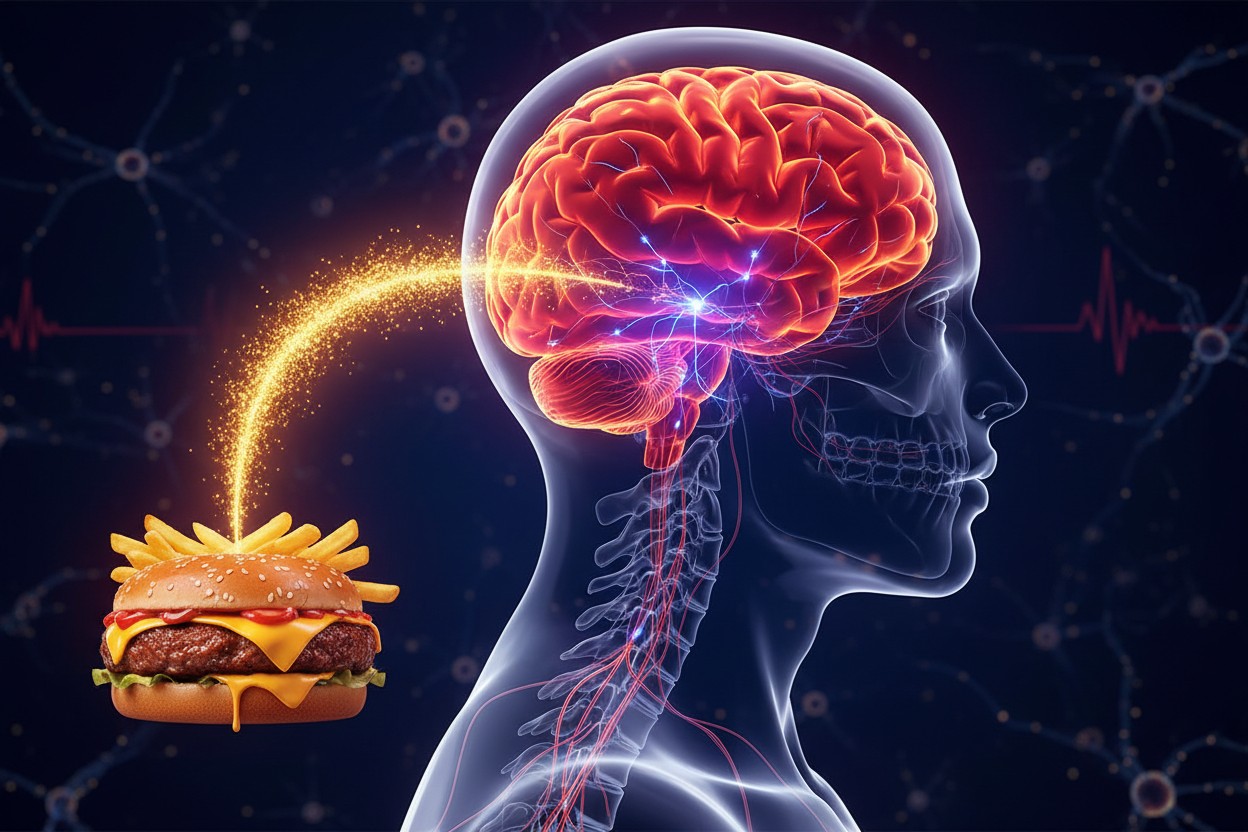
If we can finally accept that the Butterfly Effect is a mere feature of our flawed models, and not a property of the real world, then we can embrace a new, more powerful way forward. The solution is to stop building from the bottom up and start from the top down. Instead of trying to calculate every wave, every gust, and every cloud, why not let artificial intelligence learn the macro-rules of the climate system? AI, in this context, does not try to simulate the forest by modeling every single ant. It looks at the forest from above, analyzing decades of weather patterns, ocean currents, and temperature data to learn the overall behavior of the system. This top-down approach is already yielding superior results. AI-powered weather models are matching and surpassing traditional GCMs in accuracy. By breaking the tyranny of the 2-week iterative limit, AI is bringing us closer to a future of reliable month-long forecasts and, eventually, more trustworthy climate projections.
We stand at a crossroads. We can continue to cling to an elegant, 50-year-old theory that conveniently explains why our predictions fail, or we can accept that the theory is void in practice and move forward. The butterfly effect is a beautiful story, but it is just a story. It is time to close the book on Chaos Theory’s reign over climate science and open a new chapter, one where humanity finally builds the tools to understand the stable, predictable planet we actually live on. The butterfly has been released; it is time to stop chasing it. The planet is far more stable than we have been led to believe; replacing climate doom bias and climate change dogma with hard data analysis from objective use of artificial intelligence, we could gain a better understanding of weather and climate and predict it with far better accuracy.
Sources include:
Submit a correction >>
Tagged Under:
AI Weather Prediction, butterfly effect, Chaos Theory, climate fraud, climate stability, data analytics, false narrative, global warming hoax, globalist agenda, predictive science, top-down approach
This article may contain statements that reflect the opinion of the author
RECENT NEWS & ARTICLES